
Ode of a Pest
You call me a pest,
A menace, a pain,
Yet somehow I'm thriving
Again and again.
You build fancy fences,
I dig underneath.
You patch up the holes,
I smile through my teeth.
You set clever traps,
You call them "top-notch,"
I send Cousin Kevin
To give them a watch.
You poison the bait,
You hide it with care,
I tell all my mates,
"Don't touch that one there."
You plant native seedlings,
So hopeful and proud,
I bring all my friends,
"Free buffet!" we shout.
The rabbits breed quickly,
The rats use their brains,
The possums eat leaves,
The pigs redesign drains.
The goats eat your saplings,
The deer disappear,
The wallabies bounce off,
"Nothing to see here."
You call it pest control,
We call it a game.
You learn all our habits,
We do just the same.
So next time you spot me,
Remember this fact:
While you're making a plan,
I'm busy adapting to that.
Rats, Rabbits, Deer and Goats: Different Pests, Similar Consequences

Hunting as a Tool for Pest Management and Food Gathering
Author: Sharon Dean
Hunting plays an important role in both pest management and sustainable food gathering. In countries such as New Zealand, many introduced animal species, including deer, wild goats, rabbits, pigs, and wallabies, can cause significant environmental damage.
One of the key benefits of combining hunting with pest management is that it turns an environmental challenge into a useful resource. Rather than simply removing pest animals, hunters can utilize the meat, hides, and other products, reducing waste and contributing to household food security. This approach aligns with sustainability principles by making productive use of invasive species.
However, hunting alone is not always sufficient to control pest populations. Effective pest management often requires an integrated approach that combines hunting with trapping, habitat management, exclusion methods, and community involvement. Safety, ethical hunting practices, and compliance with local regulations are also essential considerations.
In New Zealand, hunting contributes to conservation efforts while providing recreational opportunities and access to wild food. As interest in sustainable living and local food sources grows, hunting continues to be recognized as a valuable tool that supports both environmental management and food gathering.
Protecting Land, Combating Pests

The Secret Life of New Zealand's Pests

Rabbits and their population explosions
If possums are stealthy, rabbits are the exact opposite. Rabbits have turned reproduction into an Olympic sport.
A female rabbit, known as a doe, can become pregnant again almost immediately after giving birth. Under favourable conditions, a doe may produce 4 to 7 litters each year, with 3 to 8 kits per litter being common.
Not only that - but rabbits can also start to breed from 2 to 3 month of age!
Let's do some rough maths.
One healthy female producing six litters of five kits each could potentially produce around 30 offspring in a single year. If a portion of those offspring survive and begin breeding themselves, numbers can explode remarkably quickly.
Rabbits have evolved this strategy because, in their native environments, many young animals never survive to adulthood. Their solution is simple:
"If some don't make it, make more rabbits."
Lots more rabbits!
When food is abundant, winters are mild, and predator pressure is low, rabbit populations can increase dramatically in a very short period. This is why a paddock with a handful of rabbits one year can seem overrun the next.
The lesson?
Never underestimate a rabbit if you think there aren't many of them. They're already working on that problem.

Why Rats and Rodents are smarter than we think...
If pests held intelligence tests, rats would probably insist on marking their own papers.
Rats are among the most adaptable and intelligent pest species in New Zealand. They can solve simple problems, remember food locations, learn from experience, and even teach other rats where to find food and avoid danger.
One of their most frustrating traits is neophobia, a fear of new things. A rat may approach a newly placed trap or bait station several times before investigating it.
While this cautious behaviour helps keep rats alive, it often drives pest controllers slightly mad.
Rats are also impressive climbers, swimmers, jumpers, and escape artists.
Roof space?
No problem.
Waterway?
Easy.
Tiny gap in a shed wall?
Consider it an open invitation.
As if intelligence wasn't enough, rats breed at remarkable rates. A female rat can produce 5 to 7 litters per year, with 6 to 12 pups per litter being common under favourable conditions. Young rats can begin breeding within a few months of birth, meaning populations can grow rapidly if food and shelter are plentiful.
The secret to rat success isn't just breeding. It's their ability to adapt. If one food source disappears, they'll find another. If one route becomes dangerous, they'll create a new one. In many ways, rats survive because they're constantly learning.
Lesson learned: If your pest management plan is predictable, the rats may already be one step ahead.

Why Feral Pigs Never
Read the Rules
Feral pigs are what happen when intelligence, strength, curiosity, and complete disregard for property boundaries are combined into one animal.
Landowners build a fence.
The pig checks whether it's climbable.
Not climbable?
Dig under it.
Can't dig under it?
Push through it.
Still can't get through?
Wait until it rains and try again.
Feral pigs are notorious for ignoring the plans humans make for them. They root up pasture, damage crops, churn up riverbanks, destroy native vegetation, and generally behave as though every paddock is a personal renovation project.
They're also highly social animals. Sounders, usually consisting of females and young pigs, can move across large areas searching for food. Their varied diet means almost nothing is off the menu, from roots and fungi to insects, eggs, carrion, and agricultural crops.
Female pigs can begin breeding at a young age and may produce two litters a year, often with 4 to 10 piglets per litter, depending on conditions. That's one reason pig populations can rebound quickly after control efforts if management isn't sustained.
What makes pigs particularly challenging is their intelligence. They learn from pressure, become wary of human activity, alter their movement patterns, and quickly identify safe areas. In other words, they're not following the pest-control rulebook because they're busy writing their own.
The feral pig's guiding principle seems to be:
"If there's a rule, a fence, or a carefully managed piece of land, let's see what happens when we ignore it."
And unfortunately for landowners, the pigs usually find out first.

Goats: The Four-Legged Landscaping Contractors Nobody Hired
Goats have many admirable qualities. They are tough, hardy, intelligent, and capable of surviving in places that seem impossible to reach.
Unfortunately, they also eat just about everything.
Often described as "walking compost bins," feral goats browse on a huge range of plants, including native shrubs, young trees, seedlings, grasses, and weeds. To a goat, a carefully regenerating native forest looks a lot like an all-you-can-eat buffet.
Unlike sheep, which prefer grazing, goats are browsers. This means they actively target leaves, bark, shoots, and young growth. In large numbers, they can prevent forests from regenerating and significantly alter native ecosystems.
Goats are also remarkable climbers. If there's a steep hillside, rocky bluff, gully, or impossible-looking cliff face, chances are goats are already standing on it wondering why you're struggling to reach them.
Their reputation for surviving almost anywhere isn't entirely undeserved. They can thrive in rugged hill country, scrubland, forest margins, and remote back-country environments.
Female goats usually produce one to three kids each year, with twins being very common and triplets not unusual under good conditions. Combined with high survival rates and few natural predators, populations can grow rapidly when left unmanaged.
Perhaps the most frustrating thing about feral goats is their ability to appear where they shouldn't be.
Fence? Climbed it.
Steep gully? Crossed it.
Remote reserve? Moved in years ago.
Goats seem to operate under one simple philosophy:
"That plant took twenty years to grow. Let's see how it tastes."
For conservation managers, landowners, and pest controllers, this enthusiasm for vegetation is exactly why goat populations require ongoing management.
Deer: Nature's Gardeners Who Never Ask Permission
At first glance, deer don't seem like a pest at all.
They're majestic, cautious, and highly valued by hunters. However, when populations grow beyond what an area can support, deer can have a significant impact on native forests, farmland, and regenerating vegetation.
Think of deer as enthusiastic landscapers who only know one design style:
"Eat everything within reach."
Deer browse on seedlings, shrubs, young trees, and forest understorey plants. In native forests, high deer numbers can prevent young plants from reaching maturity, changing forest composition over time.
What makes deer particularly successful is their incredible adaptability. They quickly learn where hunting pressure exists and adjust their behaviour accordingly. A deer seen regularly in daylight during the roar may suddenly become strictly nocturnal once it figures out people are interested in its whereabouts.
Female deer, known as hinds, typically produce one fawn each year, although twins can occasionally occur. Compared to rabbits or pigs, their breeding rate is relatively modest. The challenge isn't how quickly they reproduce. It's that deer are long-lived, highly mobile, and have few natural predators in New Zealand.
They're also experts at disappearing.
A hillside can appear empty one moment, then reveal half a dozen deer the second you stop looking. Hunters often joke that deer possess an extra sense that alerts them whenever someone starts thinking about them.
Their survival strategy is simple:
Stay quiet
Stay alert
Move when nobody is watching
Unfortunately for native forests, they're extremely good at it.
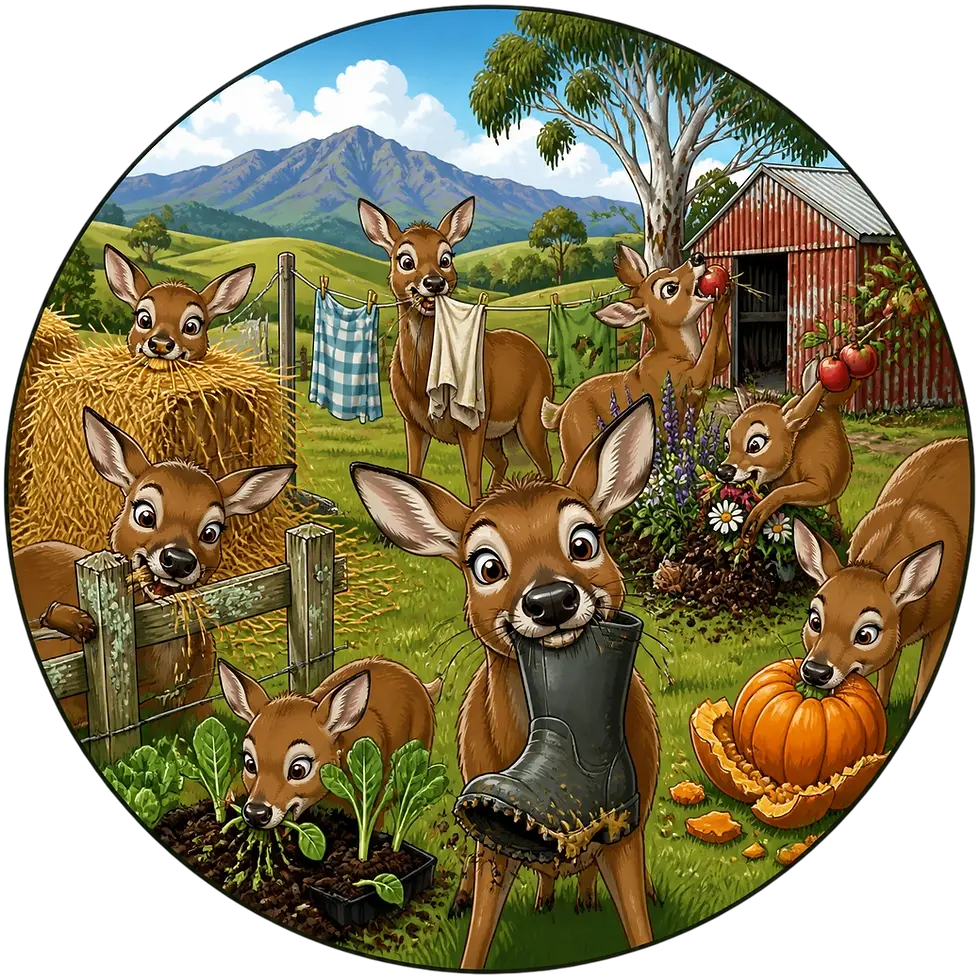

Wallabies: The Cute Invaders
Wallabies may win the award for the pest species most likely to fool newcomers.
They're small. They're furry. They hop.
What's not to like?
Quite a lot, it turns out.
Introduced to New Zealand in the 1800s, wallabies have established populations in several parts of the country and continue to spread if left unmanaged. Their impact comes from browsing vegetation, competing with livestock for food, and damaging native ecosystems.
A wallaby's daily routine seems straightforward:
Find plants.
Eat plants.
Find more plants.
Repeat.
Unfortunately, many of those plants are native species that conservation managers would prefer remained uneaten.
Wallabies are selective feeders and can significantly hinder forest regeneration by consuming seedlings and young plants before they become established.
What makes wallabies particularly successful is their reproductive strategy.
Female wallabies generally produce one joey at a time, but they are remarkably efficient breeders. Like many marsupials, they can have a developing embryo waiting in reserve while raising a joey in the pouch. This allows populations to grow steadily under favourable conditions.
Wallabies are also experts at keeping a low profile. Dense scrub, plantation forests, and rough hill country provide excellent cover, making populations much larger than people often realise.
If rabbits specialise in quantity and deer specialise in stealth, wallabies seem to specialise in quietly expanding into new areas before anyone notices.
Their unofficial motto could be:
"We're adorable, so surely nobody will mind."
Unfortunately for landowners and native ecosystems, the vegetation certainly minds.
Final Thoughts
Every pest has its own survival strategy:
-
Rats outthink you.
-
Rabbits outbreed you.
-
Possums out-hide you.
-
Feral pigs ignore your plans.
-
Goats eat everything.
-
Deer disappear when you need to find them.
-
Wallabies convince everyone they're cute while quietly eating the countryside.
The secret to successful pest management isn't just knowing where these animals are.
It's understanding how they survive, adapt, and thrive.
Once you understand their strategy, you're far better equipped to stay one step ahead.
The Wildlife Department of Questionable Decisions
Welcome to the Wildlife Department of Questionable Decisions, a light-hearted look at the creatures that spend their days ignoring common sense and keeping the rest of us guessing.
Here you'll meet rats that won't accept free food, pigs that treat your property like a timeshare, rabbits that appear from nowhere, possums with remarkably expensive taste in trees, deer that vanish the moment you have a plan, and goats that firmly believe gravity is somebody else's problem.
Featuring:
-
Rats that won't enter bait stations
-
Pigs that keep turning up uninvited
-
Rabbits that multiply when nobody's looking
-
Possums that develop expensive taste in trees
-
Deer that disappear the moment you have a plan
-
Goats that believe gravity is optional
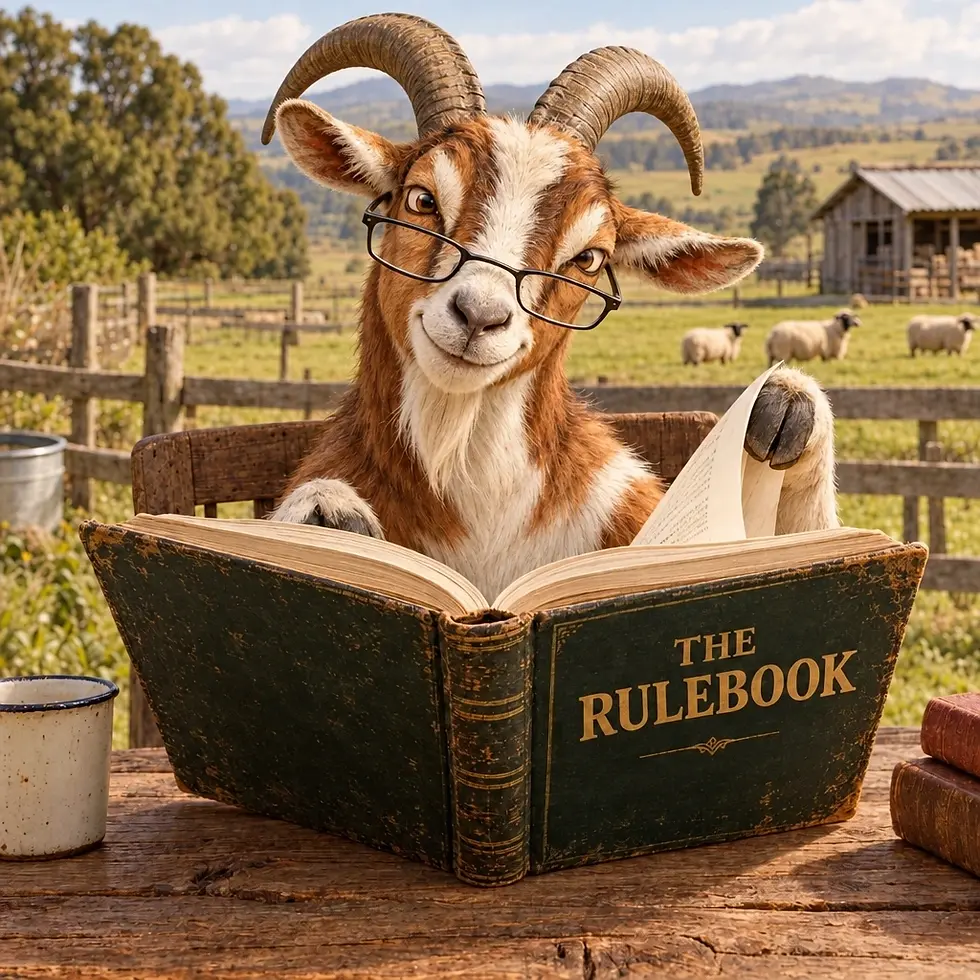
Why Animals Never Read the Rulebook (And Why Goats Probably Ate It)
From bait-shy rats and disappearing deer to pigs that keep coming back and goats that seem determined to live where gravity doesn't apply.
If you've ever hunted them, trapped them, photographed them, or simply tried to get rid of them, you'll already know that animals have a remarkable talent for doing the exact opposite of what you expect.
You spend half an hour setting up the perfect rat bait station, and the rat decides it suddenly prefers a stale pie crust behind the shed. You finally locate a mob of deer, tell your mates you've got them figured out, and they immediately move three valleys away.
Rabbits appear out of nowhere, pigs treat your property like a favourite holiday destination, and possums somehow manage to find the one tree in the district you'd rather they left alone.
Then there are goats.
Goats don't just ignore the rulebook.
They eat it.
A goat can stand on a cliff that looks impossible for any living creature to reach, stare directly at you as if questioning your intelligence, and then disappear into terrain better suited to mountaineers than livestock.
If there was ever an animal that wakes up each morning looking for new and creative ways to cause confusion, it's a goat.
The trouble is, we humans love patterns. We like plans. We like believing we've worked things out. Wildlife, however, didn't attend the same planning meeting. Rats, pigs, rabbits, possums, deer, and goats are all operating under one simple principle: survive, eat, breed, and avoid becoming someone else's success story.
What looks like stubbornness is usually caution. What looks like intelligence is often instinct. And what looks like an animal deliberately making your life difficult... well, sometimes it does feel a little personal.
So before you accuse a rat of being a genius, a deer of holding a grudge, or a goat of plotting against society, let's take a look at some of the reasons animals behave the way they do.
Because as you'll soon discover, they're not breaking the rules.
They're just following a rulebook that humans were never invited to read.
Why Rabbits Suddenly Appear
Few things in the rural world are more dangerous than saying, "I think we've finally got the rabbits under control."
Those words have been known to summon rabbits from neighbouring farms, distant hillsides, and possibly alternate dimensions.
One day the paddock looks fine. The next, there seem to be rabbits sitting everywhere you look, like they've organised a family reunion and forgotten to tell you.
The truth is rabbits rarely appear overnight. They've usually been there all along, quietly multiplying while you were busy paying attention to literally anything else.
Rabbits are breeding machines. Give them good feed, mild weather, and a break from predators, and they'll respond with the sort of enthusiasm usually reserved for all-you-can-eat buffets. Young rabbits emerge from burrows, numbers increase rapidly, and suddenly it looks as though the ground itself is producing rabbits.
What makes them particularly frustrating is their ability to stay largely unnoticed while their population is building. By the time you spot a few rabbits, there are often many more nearby that haven't introduced themselves yet.
So if rabbits seem to have appeared out of nowhere, don't take it personally. They weren't trying to surprise you.
They were simply waiting until there were enough of them to make the situation slightly embarrassing.

“Hide and seek champion: still undefeated.”
-
Rats that won't enter bait stations
-
Pigs that keep turning up uninvited
-
Rabbits that multiply when nobody's looking
-
Possums that develop expensive taste in trees
-
Deer that disappear the moment you have a plan
-
Goats that believe gravity is optional
-
Wallabies' masters at keeping a low profile
-
Canadian Geese have the subtlety of a fire alarm.

Why Deer Vanish Right After You've Worked Them Out
Every hunter knows the feeling.
You spot deer in the same clearing three evenings in a row. They're feeding at the same time, using the same trail, and behaving exactly as you'd hoped. Naturally, you tell yourself, "I've got these deer figured out."
The deer then hold an emergency meeting.
By the next weekend they've completely vanished.
The first thing to understand is that deer don't actually disappear.
Unlike your car keys, they're usually somewhere nearby. They've simply decided that your plans are no longer aligned with their interests.
Deer are survival experts. The moment they detect increased human activity, hear shots, smell people, or notice repeated disturbance, they often adjust their routines.
That can mean moving into thicker cover, feeding later in the evening, becoming more nocturnal, or relocating to that impossible patch of scrub that requires three river crossings and a mountain goat's sense of balance to reach.
Mature deer are particularly good at this game. A wise old stag didn't get old by standing around waiting for someone with binoculars to admire him. He's spent years perfecting the art of making hunters question their sanity.
That's why deer seem to vanish right after you've "worked them out."
What has actually happened is that the deer worked you out first.
The good news is that deer are creatures of habit. Once the pressure eases, many will gradually return to their preferred feeding and travel areas. The bad news is they'll usually wait until the day after you've stopped checking.
As with many wildlife mysteries, the deer aren't breaking the rules.
They're simply reminding us that they helped write them.
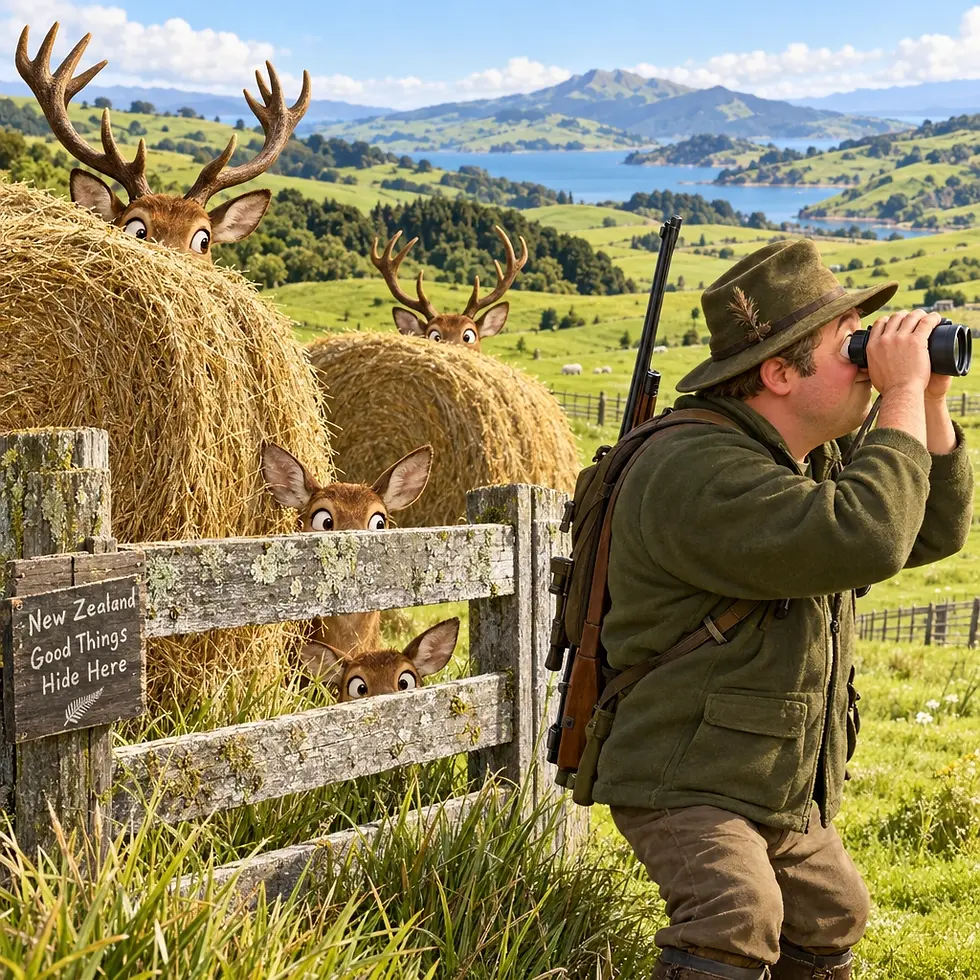

The deer called it hide-and-seek. The hunter called it a day.
Why Possums Always Pick Your Favourite Tree
Every possum in New Zealand appears to operate under one simple rule:
"Find the tree the human likes most and start there."
It doesn't matter whether you've got hundreds of trees on the property. Possums somehow manage to identify the one specimen you've been admiring for years, the one providing shade, shelter, or a stunning display of flowers, and immediately add it to their dinner menu.
This often creates the impression that possums are acting out of spite. Rest assured, they're not.
They're actually being far more annoying than that.
Possums target certain trees because they're fussy eaters. Some trees provide tastier leaves, more nutritious growth, flowers, fruit, or sap that's worth travelling for. To a possum, your favourite tree isn't special because you love it. It's special because it's the equivalent of a five-star restaurant with free parking.
What makes matters worse is that once a possum discovers a good food source, it tends to become a regular customer. Night after night, it returns to the same tree, helping itself to the buffet while leaving the owner wondering why every other tree remains untouched.
Seasonal changes can make things even more confusing. A tree ignored for months can suddenly become a possum hotspot when new growth appears or flowering begins. To us, it looks random. To the possum, it's simply checking the specials board.
So if you've ever wondered why possums seem determined to target your best trees, don't take it personally.
They're not trying to ruin your day.
They're just highly committed food critics with very low standards for property rights.
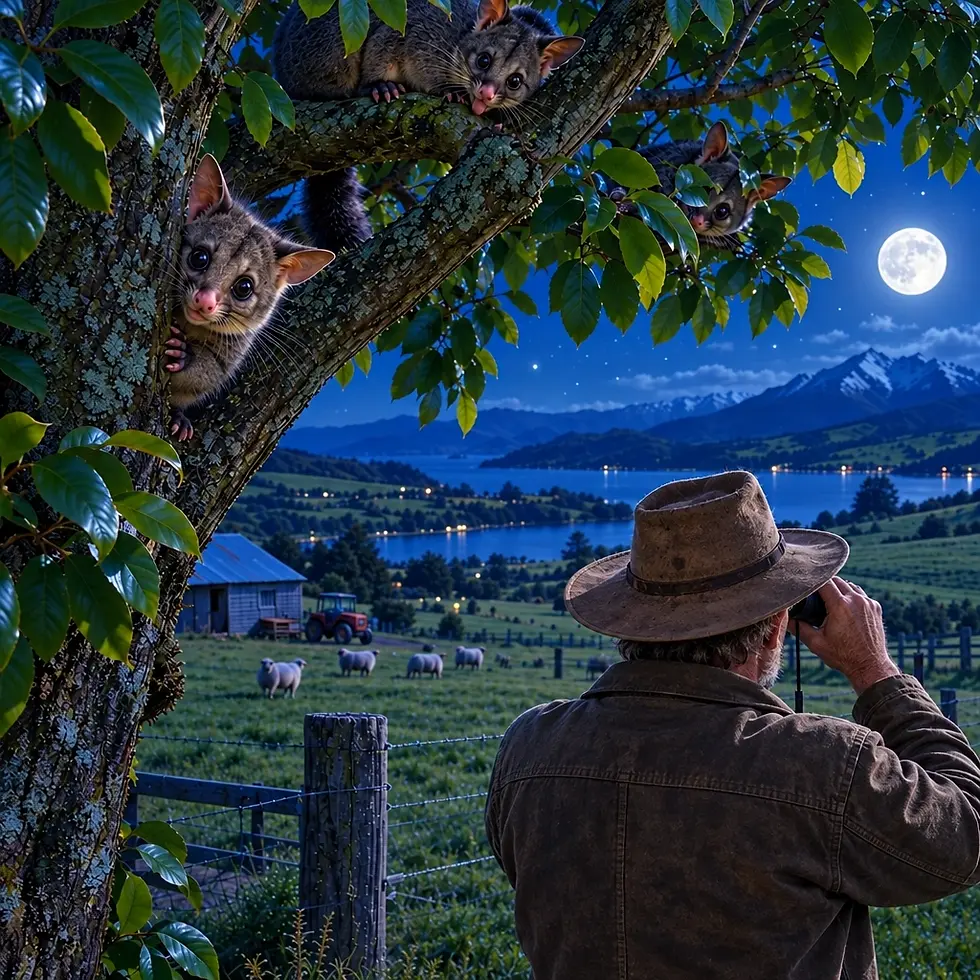
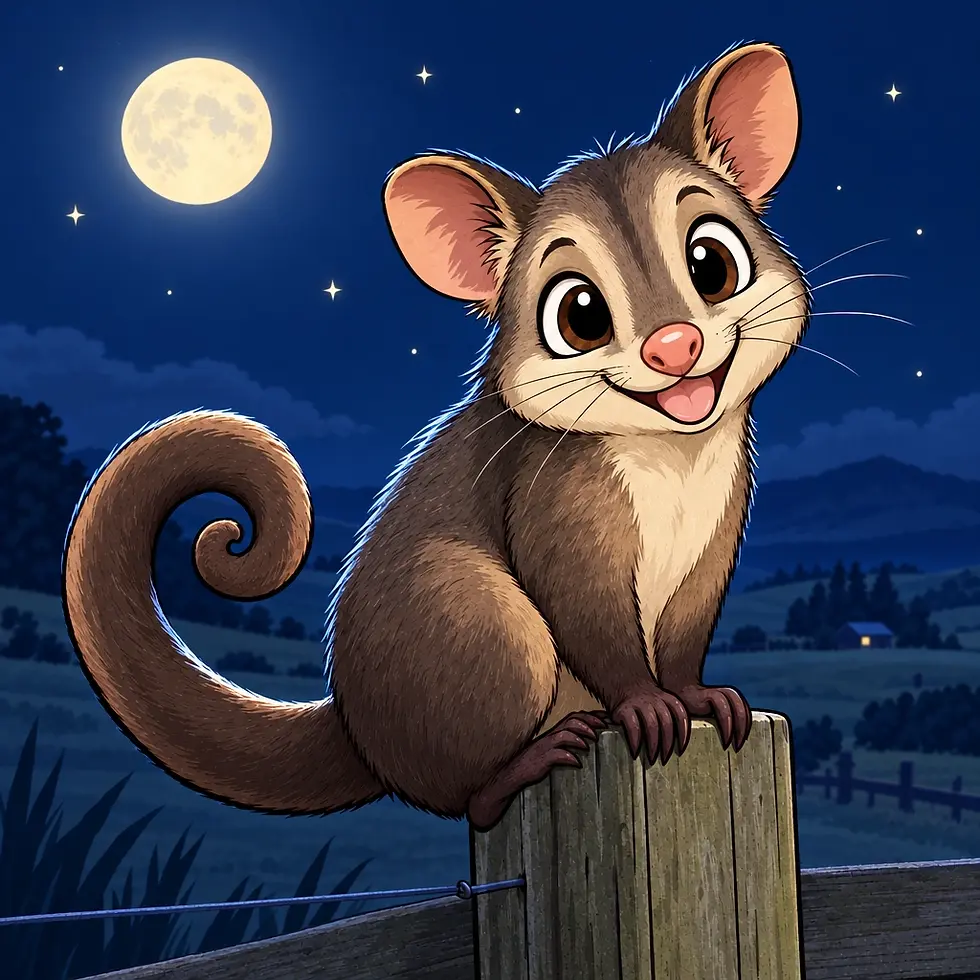
“The farmer brought a torch. The possum brought night vision.”
Wallabies: The Neighbours Nobody Invited
If you've ever thought, "I haven't seen a wallaby around here for ages," congratulations, you've probably just guaranteed you'll see three tomorrow.
Wallabies are masters of keeping a low profile. They spend much of their time tucked away in scrub, forestry blocks, gullies, and thick cover where they're easy to miss.
Then, without warning, they seem to appear everywhere at once, helping themselves to pasture, seedlings, and anything else that looks vaguely edible.
The thing is, wallabies don't suddenly arrive. They're often already there, quietly going about their business while remaining remarkably good at avoiding attention.
Changes in food availability, breeding activity, seasons, or population growth can make them more visible, creating the impression they've materialised overnight.
Think of them as the wildlife equivalent of neighbours who never attend community meetings but somehow know everything that's going on.
They're not trying to surprise you.
They're just experts at being unnoticed until they aren't.
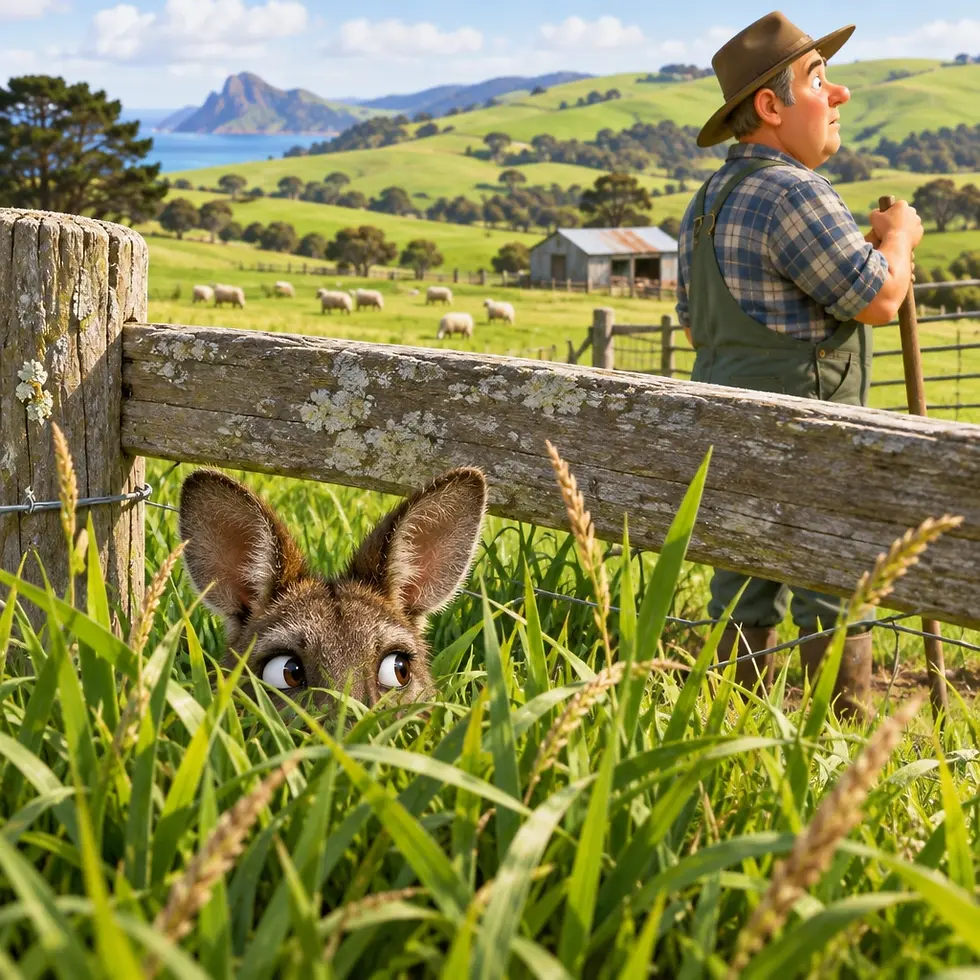
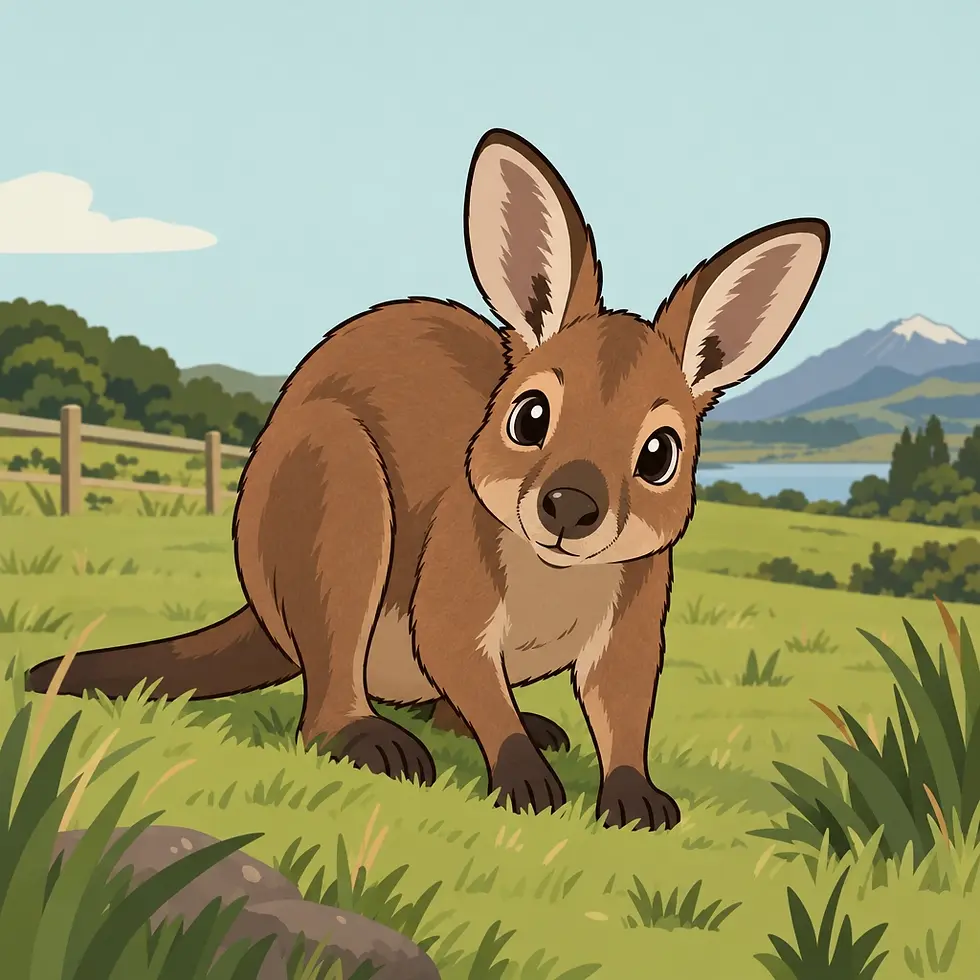
“Keep your head down, your ears up, and pretend you were never here.”
Pigs that Keep Turning Up Invited
If pigs could send text messages, they'd probably say, "Just passing through..." right before turning your favourite valley into a ploughed paddock.
Wild pigs have an uncanny knack for reappearing just when you think they've finally moved on. You chase them out, hunt the area, and enjoy a few weeks of peace before fresh rooting suddenly appears as if they've never been away. At this point, it's fair to wonder whether they've secretly put themselves on the rates notice.
The reality is much simpler. Pigs are creatures of habit, and if an area offers good food, water, shelter, and relative safety, they'll happily keep coming back. To a pig, a productive patch of bush isn't just a feeding area, it's prime real estate with excellent amenities.
They're also blessed with remarkably good memories. Once pigs discover a reliable food source, whether it's grubs, roots, crops, or fallen fruit, they tend to keep it bookmarked.
Pressure might make them leave temporarily, but many simply retreat, wait for things to settle down, and wander back as though nothing happened.
Think of them as the wildlife equivalent of that relative who drops in unannounced, helps themselves to the fridge, rearranges the furniture, and somehow acts surprised when you notice.
They're not being rude.
They've just decided your property is worth another visit.
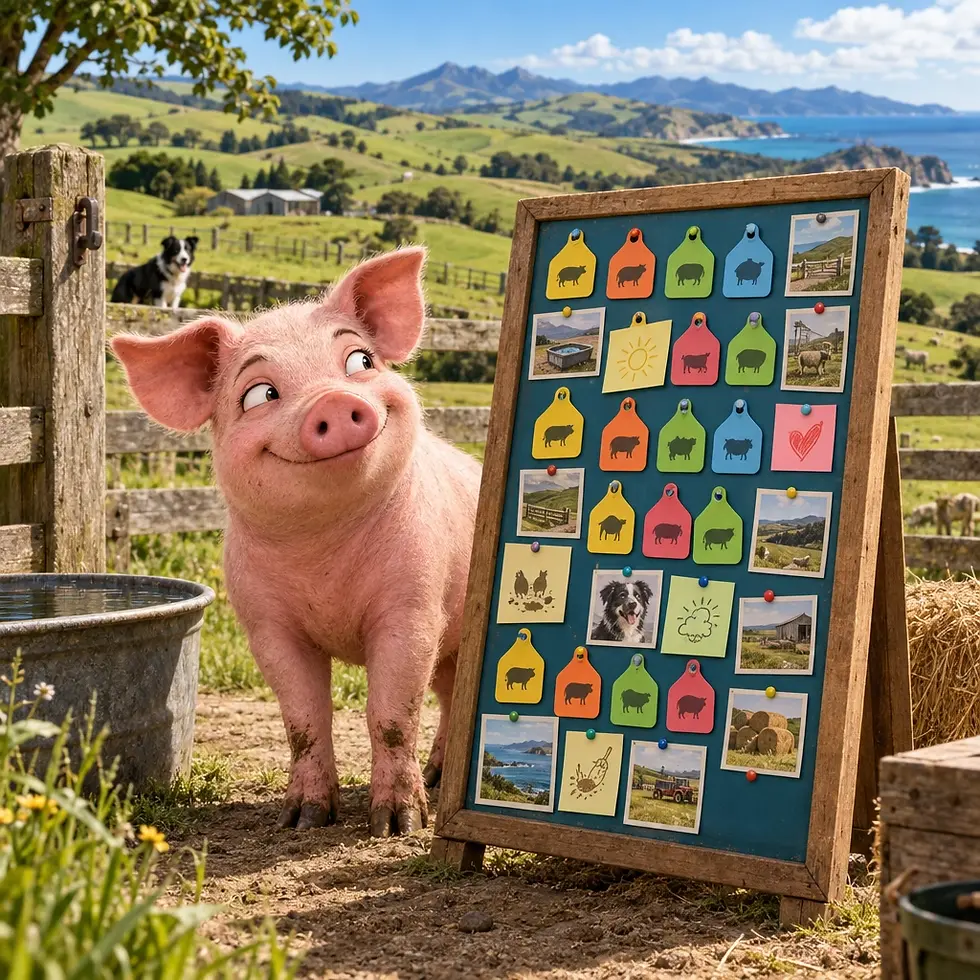
“The pig remembers every snack—and exactly where you hid it.”
Rats That Treat Bait Stations Like Suspicious Free Samples
Imagine setting up a free barbecue and having everyone in town walk past it suspiciously.
That's pretty much what it's like dealing with rats.
Many people assume rats will rush straight into a bait station, but rats are naturally cautious creatures. In fact, if a rat sees something new in its environment, its first thought isn't "Free food!" but "What's the catch?"
This behaviour, known as neophobia, is one of the reasons bait stations can sit untouched for days or even weeks. Rats are professional sceptics. They'll happily investigate from a safe distance while sending what appears to be an imaginary health inspector to assess the situation.
Location matters too. Rats prefer travelling along walls, fences, logs, and dense cover where they feel secure. Place a bait station in the middle of an open area and they'll often treat it like an unattended white van offering free candy.
The frustrating part is that the rat isn't ignoring your bait because it's cleverer than you. It's simply following a survival strategy that's worked for generations.
So if your bait station sits untouched while the rats continue causing trouble, don't be offended.
They're not rejecting your hospitality.
They're just conducting an extremely thorough risk assessment.
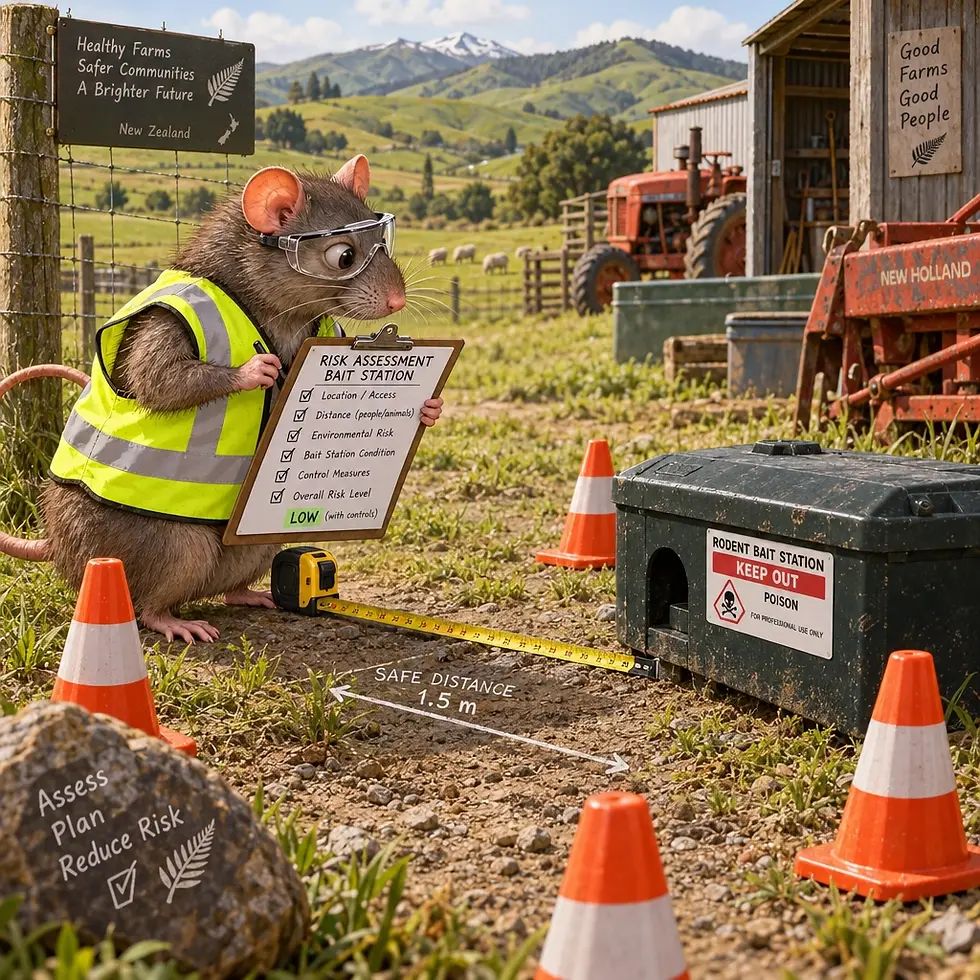
“The rat checked the risks, reviewed the bait, and filed a formal complaint.”
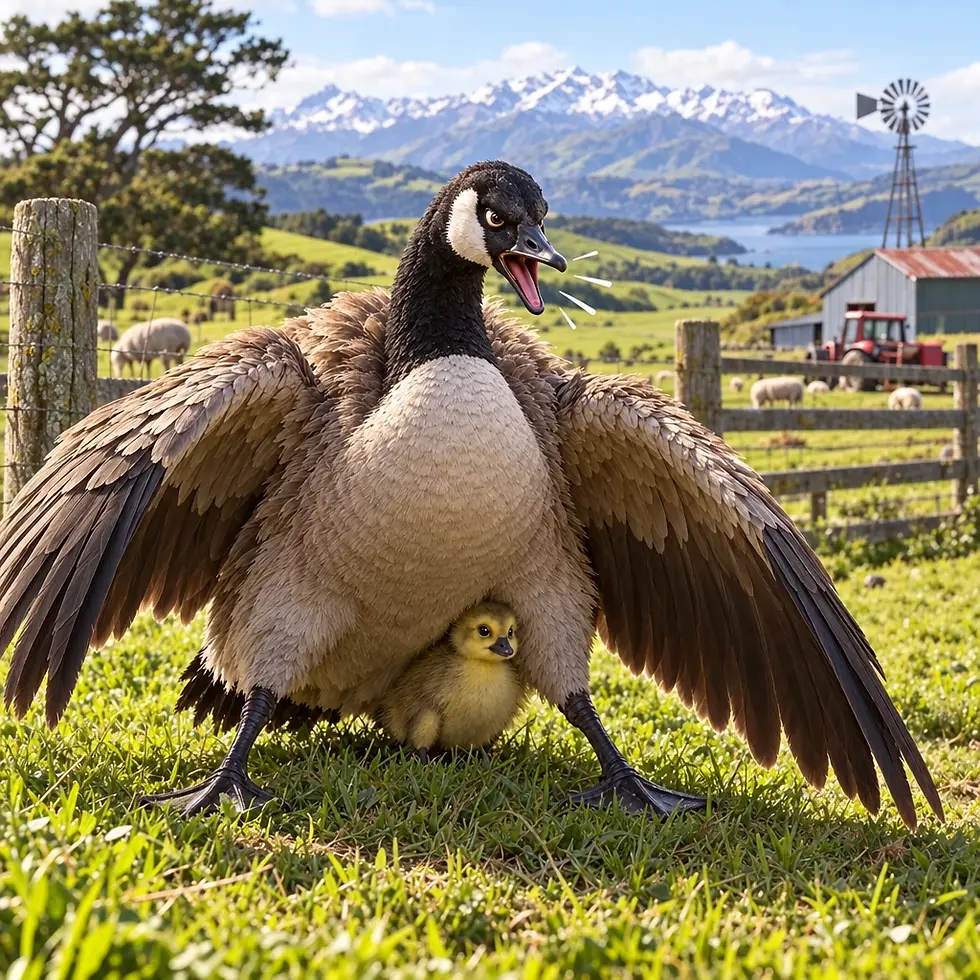
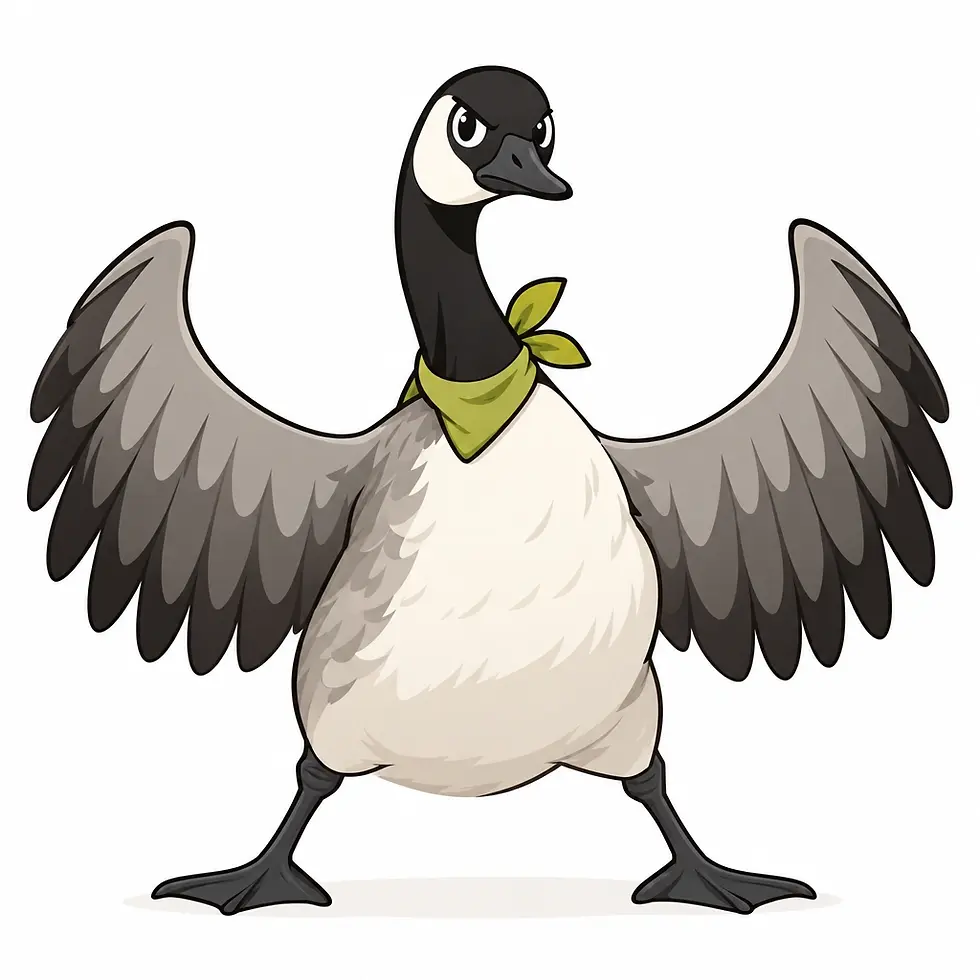
Canadian Geese: Nature's Self-Appointed Security Guards
If you've ever walked calmly across a paddock only to be hissed at by a bird, congratulations, you've met a Canadian goose.
Canadian geese possess the rare ability to act like they personally own every pond, reserve, sports field, and grassy area within sight. They don't just live there. They manage it, patrol it, and occasionally feel the need to remind visitors who's really in charge.
What makes geese particularly memorable is their confidence. Most wildlife prefers to avoid confrontation. Canadian geese, on the other hand, often seem willing to start it. During nesting season especially, they become fiercely protective and can interpret anything from a passing dog to a curious human as a potential threat.
The result is what can only be described as the wildlife version of an overenthusiastic neighbourhood watch program.
You'll often see them feeding peacefully one moment and charging across a field the next with wings spread, neck extended, and a look that says, "I don't know who you are, but you've got some explaining to do."
Despite their reputation, geese aren't being aggressive for the sake of it. They're simply protecting their territory, mates, and young.
Unfortunately, they sometimes do this with all the subtlety of a fire alarm.
So if a Canadian goose has ever chased you, hissed at you, or made you take a detour around a pond, don't feel singled out.
They treat everyone like a suspicious trespasser.
It's just part of their customer service policy.
“The goose is not overreacting. You are simply underestimating the security detail.”